|
|
|
| FROM GREAT ACHIEVEMENTS, TO INSPIRING TRADITION! We're celebrating
sixty years of
car protruding performance of American design of the fifties. The bold and adventurous
spirit of iconic "fish tail" fins (a.k.a.
tail fins) exploded onto the pop culture scene in 1951,
Click PDF, above, to see fifteen fins on cars, some larger than those of a great white shark
One
of Harley's favorite organic forms since he was a kid growing up in Southern After all the success introducing Le Sabre during 1951-'52, even with a big splash in Europe at the Paris Auto Salon, Harley Earl decided to make tail fins much bigger on all GM's mid-decade car model years even though many other leading traditional GM engineering and finance execs loathed the idea (Mr. Earl's words w/ red arrow below). But they weren't in power, Harley and his allies were. So, he chose this outrageous design that ended up symbolizing the entire era. Harley had always said tail fins, "gave car owners an extra receipt for their money in the form of a visual prestige marking." Shark fins on automobiles were a smash hit for GM's auto sales and it's major competitors, too. This titanic "art-with-intent to sell millions of high end consumer products" only started to ebb moving into the 1960s.
" I became the most hated man in the place (GM), because I got in everyone's hair," said Harley Earl in a 1956 New York Times article on him and his Styling Section titled, Along The Highways and Byways of Finance. "When we introduced it," Earl's referring to the tail fin quote shown in Detroit News article above, "we almost started a war inside the corporation." Earl was an engineer, but truly different than others in the fact he was always fighting as he said, "The Battle For Body Beautiful." Above quotes bring to life the Car Design Pioneer's styling leadership objective of creating dynamic change and modernity into all GM’s products during the mid-twentieth century, a time when GM and the auto capital in Michigan were sitting on the throne of the business world. Earl's business idea was visionary, but later in the decade this maverick lost the "war in the corporation" when certain powerful GM execs, one of whom fought Earl’s 1948 tail fin idea from the very start, aimed at any cost to get even, by breaking up the special design union created by America's founder of the Automobile Design Profession. Afterwards, General Motors was never the same and the immense respect once held for Earl's "Styling Leadership" rules and principles, aimed to keep GM strong long into the future, were completely forgotten, within a generation, by GM's core leaders. A long downward spiral followed. Today, the auto industry's first superstar designer is being heralded as, "one of the most hotly collected artists of the 20th Century," said Leslie Kendall in 2005, curator of the Petersen Automotive Museum in Los Angeles, Ca.
|












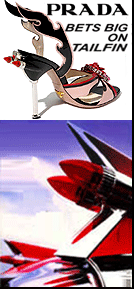















 after Harley
Earl debuted what he'd taken several years - and huge business risks - to develop: a
one-of-a-kind automotive design concept car with giant fins named
Le Sabre
(further down at this section is a quote from Earl, within a Detroit News obituary,
saying his tailfin design, "almost started a war in the corporation").
By 1952 the trend
after Harley
Earl debuted what he'd taken several years - and huge business risks - to develop: a
one-of-a-kind automotive design concept car with giant fins named
Le Sabre
(further down at this section is a quote from Earl, within a Detroit News obituary,
saying his tailfin design, "almost started a war in the corporation").
By 1952 the trend